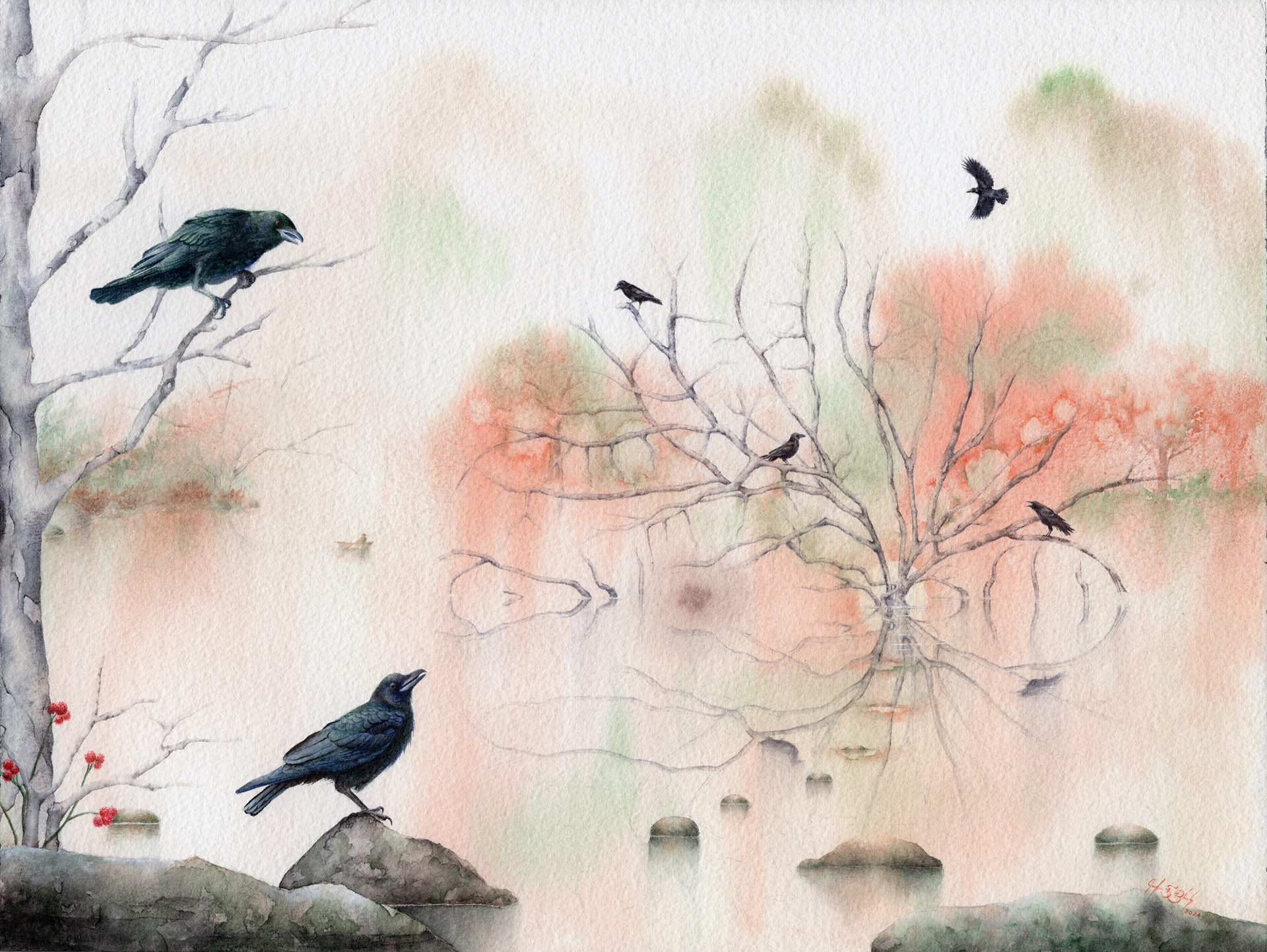
West Nile virus-associated chorioretinitis - Watercolor, 2024
This painting abstracts the retina’s vasculature, describing it as a tree reflected on water. Behind the tree, lesions radiate curvilinearly from the optic disc in a pattern characteristic of neuroinvasive West Nile virus-associated chorioretinitis. These lesions and other inflammatory changes associated with the disease can cause potentially severe vision disruption. Corvids are a common reservoir for the virus before it is transferred to humans by the culex mosquito. In this painting, a medical student rows towards the scene in a small boat, drawn to the contrast between the nuanced detail of the anatomy and the outsized impact ocular disease can have on patients’ quality of life.